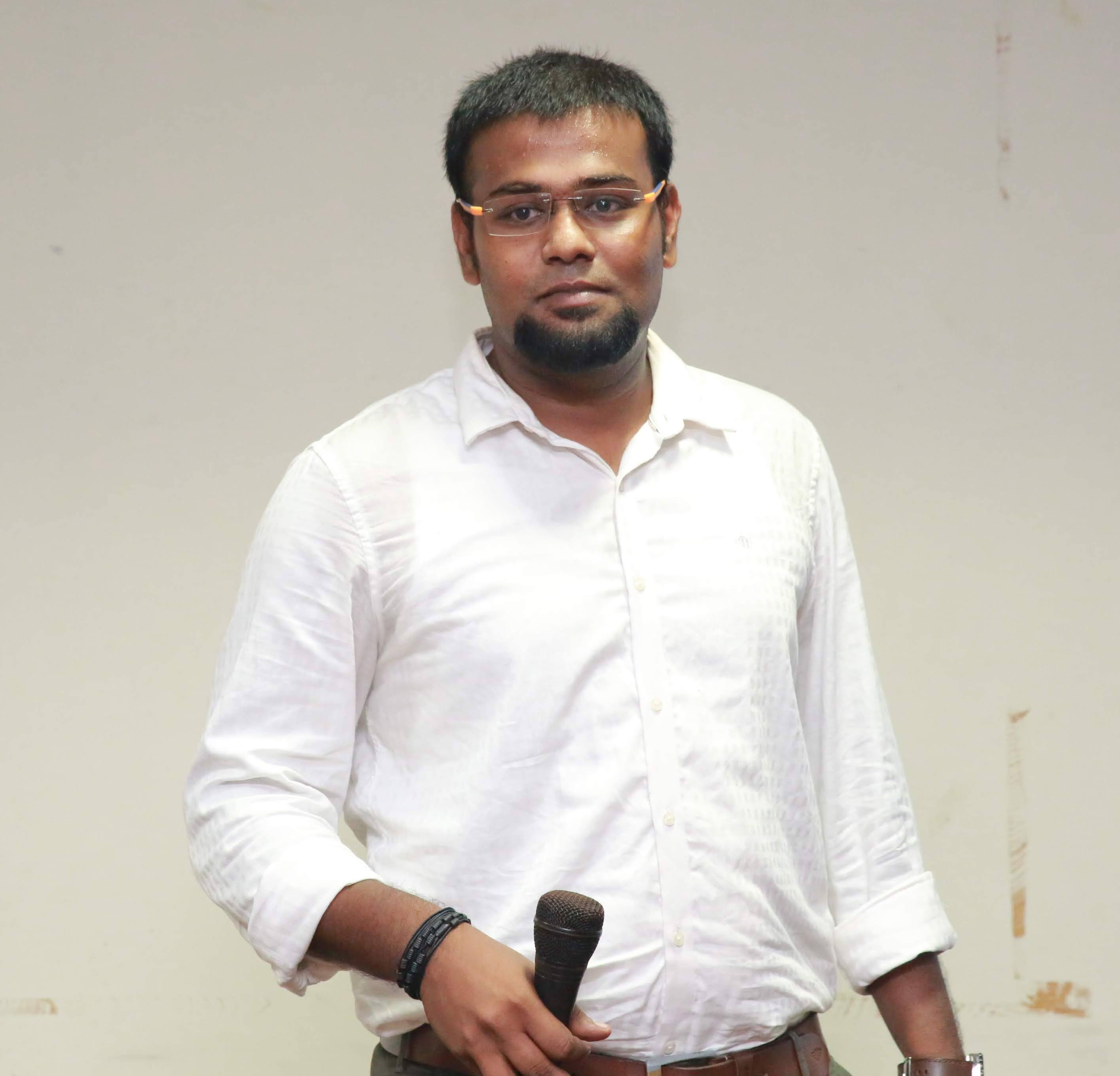
வணக்கம் & Welcome & Ter-ve-tu-lo-a! 🌟
👨🏻💻 I’m a University Lecturer in the Department of Mechanical and Materials Engineering at the University of Turku, Finland, and part of the Digital Manufacturing and Surface Engineering (DMS) group.
🔬 Research Interests: Exploring process emissions in the form of photons and phonons during material transformations. This includes studying material transformations caused by surface contacts or laser-material interactions, focusing on uncovering the underlying physics driving these phenomena.
📚 Current Focus: Understanding laser-material interactions for process monitoring and process control. This involves sensorizing processes by measuring photons and phonons emitted during transformations and leveraging this data along with Machine Learning (ML) to enhance process automation and process quality.
📽️ Passion: Mentoring and guiding others in process monitoring of advanced manufacturing processes, Additive Manufacturing, Surface Finishing, Tribological Wear Monitoring, and Academic Research.
🌐 Global Collaborations: Worked with renowned institutions like EPFL, ETH Zurich, KU Leuven, A*Star, Fraunhofer ILT, AC²T, and industry leaders such as Rolls-Royce, SAESL, Bystronic, Synova, and Nestlé.
Recent Funding: I am incredibly proud to be part of Marie Skłodowska-Curie Doctoral Network (MSCA-DN) under Horizon Europe, a highly competitive funding to advance next-generation laser-based manufacturing. Through this interdisciplinary collaboration INTELLASE involving 20 partners from 8 countries, I will be recruiting TWO doctoral candidates whose research will focus on federated intelligence and physics-tailored sensing architectures for extracting information-rich signals from laser processes. By integrating physics-based modelling, real-time multimodal sensing, and AI-driven control, my research within this project aims to achieve reliable, first-time-right precision manufacturing. Stay tuned for more updates!
About Me
Vigneashwara Pandiyan is a University Lecturer in the Department of Mechanical and Materials Engineering at the University of Turku, Finland, where he has been serving since 2025. He works at the intersection of advanced manufacturing, process monitoring, sensing, and machine learning for intelligent production systems.
He completed his M.Sc. in Precision Engineering at Nanyang Technological University (NTU), Singapore, from 2013 to 2014. His master’s work was an industrial thesis with Rolls-Royce Seletar. His thesis, Experimental Investigation of High Frequency Media Finishing Process, focused on precision surface finishing and process understanding in advanced manufacturing. He subsequently completed his Ph.D. at Nanyang Technological University (NTU), Singapore, from 2014 to 2018, under the Rolls-Royce@NTU Corporate Laboratory. His doctoral research was conducted as part of the Manufacturing and Repair Technologies theme (MRT1.1), aligned with the Factory of the Future / Industry 4.0 initiative. The research focused on process sensorization and machine learning–based monitoring and control in the subtractive manufacturing domain of grinding. His doctoral thesis, Modelling and In-Process Monitoring of Abrasive Belt Grinding Process, investigated data-driven modelling of abrasive contacts, tool wear monitoring, and the fundamental contact mechanisms governing material removal rate in grinding. This work contributed to improved monitoring, modelling, and automation of robotic grinding processes for aerospace components such as fan blades.
In 2019, Dr. Pandiyan worked at the Advanced Remanufacturing and Technology Centre (ARTC), A*STAR, Singapore, where he contributed to the Model Factory initiative. His work focused on process sensorization and integration of manufacturing data streams into centralized control and analytics platforms, supporting IIoT-based streaming analytics for industrial applications in both precision manufacturing and fast-moving consumer goods (FMCG) industries. He then joined Empa – Swiss Federal Laboratories for Materials Science and Technology, Switzerland, where he worked from 2020 to 2024. At Empa, his research focused on laser-based manufacturing processes, particularly powder bed fusion and directed energy deposition, with emphasis on understanding laser–material interaction from the perspective of process emissions. His work was carried out as part of international research consortia, including MOCONT – MOnitoring and CONTrol of AM metal process and In situ monitoring in additive manufacturing of metals and alloys based on artificial intelligence. His work involved real-time monitoring and interpretation of acoustic, optical, and other process signatures to better understand process dynamics and support improved control of additive manufacturing systems.
Prior to joining the University of Turku, he served as a Senior Researcher in Additive Manufacturing within the Digital Manufacturing program at the Technology Innovation Institute (TII), Abu Dhabi, from 2024 to 2025. His expertise spans laser–material interactions, metal additive manufacturing, tribology, surface finishing, abrasive cutting, and smart manufacturing. His current research explores the physics of acoustic and optical emissions during material transformations and surface interactions. By analysing photon and phonon emissions generated during processes such as laser–material interactions and contact-based transformations, he develops sensing and machine learning frameworks for real-time monitoring, anomaly detection, process control, and automation in advanced manufacturing systems.
Dr. Pandiyan has been working with machine learning for nearly a decade and has more than 10 years of experience in process monitoring across subtractive, additive, and other advanced manufacturing processes. His work focuses on integrating advanced sensing, machine learning, and process physics to improve reliability, automation, and qualification in modern manufacturing systems. Alongside his research, he is actively involved in teaching, mentoring, and guiding students in additive manufacturing, process monitoring, tribology, and machine learning-assisted manufacturing.
More to come as this exciting journey continues…